
Kory Rosen
I am a second-year Ph.D. student in Computer Science at Tulane University, advised by Dr. Aron Culotta. I graduated with a Bachelor of Arts in Computer Science and Political Science with a Statistics concentration from Grinnell College. My research applies machine learning to legal systems, focusing on building fair and interpretable AI tools for analyzing legal decision-making. I’m also interested in using natural language processing for legal document analysis, detecting and reducing bias in automated systems, and conducting causal analysis to understand factors that influence legal outcomes. Before Tulane, I worked on research projects at Purdue University and the University of North Texas. At Purdue, I researched how Large Language Models capture demographic-specific language patterns in survey responses, examining the relationship between language use and demographic factors. At UNT, I worked on a deep learning project in high-energy physics, using variational autoencoders for particle identification. My broader research interests include machine learning, natural language processing, AI ethics, fairness in AI, explainable AI, causal inference, and the intersection of AI and law.
Education
-

Tulane University
Ph.D. in Computer Science
Advisor: Professor Aron Culotta
8/19/2024 - -

Grinnell College
Bachelor of Arts
Majors: Computer Science, Political Science
Concentration: Statistics
8/31/2020 - 05/20/2024
Here is a list of my publications.
- From Arraignment to Resolution: Transformer Models of Court Cases2026
Manuscript in progress, planning on submitting for Winter 2026 conferences
Below is a showcase of my extensive research experiences, where I have delved into diverse fields, contributing to groundbreaking advancements and acquiring a profound understanding of Artificial Intelligence.
Tulane University
Research Assistant
08/2024 -Since August 2024, I have served as a Research Assistant at Tulane University under the guidance of Dr. Aron Culotta, working on research focused on applying machine learning methods to the legal domain. My work centers on developing deep learning models to analyze administrative datasets and predict procedural outcomes. As this research is currently unpublished, I must remain somewhat general in describing the specific methods and applications. I built the entire pipeline from the ground up, including data preprocessing, feature engineering, model development, and evaluation infrastructure. This project has deepened my expertise in neural network architectures, model interpretability, and the responsible application of machine learning to sensitive contexts, while reinforcing my commitment to careful consideration of the ethical implications inherent in deploying AI systems within high-stakes domains.
University of North Texas
Undergraduate Research Assistant
05/2022 - 08/2024During my time as a Research Assistant at the University of North Texas, I immersed myself in a deep learning project under the guidance of Professor Ting Xiao and Dr. Daniel Lersch. My involvement originated from the Research Experience for Undergraduates (REU) program, focusing on the application of variational autoencoders for particle identification within the realm of high-energy physics. As part of the research team, I contributed to the collaborative design and implementation of the models. My individual contributions included building an automated hyperparameter tuning pipeline that reduced model selection time from days to hours, developing an analytics system for learning-curve analysis, anomaly detection, and latent-space evaluation with real-time monitoring, and implementing custom optimization routines to automate model assessment and selection. I presented this work as a poster at the REU symposium, where we reported empirical results and discussed methodological limitations and future directions. Beyond the REU, there was an opportunity to extend this research into a longer-term project. Over the subsequent time, I continued to refine and expand upon our initial findings, that lead to significant progress in model performance.
Purdue University
Political Science Undergraduate Research Assistant
06/2023 - 01/2024In the summer of 2023, as a Research Assistant at Purdue University under Professors Daniel Schiff and Kaylyn Jackson Schiff, I embarked on an exploratory project to harness the potential of Large Language Models (LLMs) for the analysis of sociopolitical behavior from a demographic perspective. My role entailed a thorough examination of LLM architectures to enhance their precision in identifying demographic-specific linguistic patterns. I crafted innovative prompts that married linguistic insights with AI technology, aiming to draw out nuanced information from varied demographic segments. Analyzing the predictive accuracy of LLMs in pinpointing distinctive phrases within open-ended survey responses, I applied advanced natural language processing techniques to large datasets to uncover the complex relationship between language usage and demographic factors. This multifaceted project not only honed my technical and analytical acumen but also deepened my understanding of the ethical dimensions of synthetic data generation. The experience solidified my resolve to advocate for AI's responsible use, recognizing its power and the necessity of thoughtful application.
Tutor
CMPS6620: Artificial Intelligence
08/2025 - 12/2025As a tutor for CMPS 6620: Artificial Intelligence, a graduate-level course taught by Professor Aron Culotta, my role was to support M.S. and Ph.D. students as they developed both theoretical and practical foundations in AI. The course focused on the design and analysis of autonomous intelligent agents, combining formal algorithmic reasoning with implementation-driven assignments. I held weekly online office hours where I worked one-on-one with students to clarify core concepts such as uninformed and heuristic search, adversarial search, Bayesian networks, decision networks, Markov Decision Processes, and reinforcement learning. Much of my support centered on helping students reason through algorithm design choices, analyze correctness and complexity, and translate mathematical formulations into working implementations for programming assignments. I also provided targeted guidance on long-form assignments and exam preparation, helping students connect lecture material, textbook readings, and their own code. This role required communicating complex ideas clearly to a diverse group of graduate students and reinforcing rigorous problem-solving habits expected in an advanced AI curriculum.
Teaching Assistant
CMPS1600: Introduction to Computer Science II
01/2025 - 05/2025As a teaching assistant for CMPS 1600: Introduction to Computer Science II, the second course in Tulane’s introductory computer science sequence taught by Professor Alireza Shirvani, I supported undergraduate students as they learned structured software design and data-structure–based thinking. I led weekly recitation sessions for two sections totaling approximately 60 students, where recitations were run as hands-on lab periods focused on weekly programming assignments. During these sessions, I helped students debug code, review implementations, reason about memory management and pointers, and analyze time complexity while reinforcing core object-oriented concepts such as inheritance, abstraction, and interfaces. I also held weekly office hours providing individualized support on assignments, exams, and the semester-long class project, where students built simple games using Professor Shirvani’s Camelot virtual environment. The project was structured around graphs, with nodes representing story states and edges representing player choices, and I assisted students with implementing this structure in Java, integrating it with the Camelot API, and testing their projects end to end. In addition to instructional support, I proctored the midterm exam. I also developed supplementary practice problems and review materials to reinforce lecture content and common implementation issues.
Teaching Assistant
CMPS3160/6160: Introduction to Data Science
08/2024 - 12/2024As a teaching assistant for CMPS 3160/6160: Introduction to Data Science, an undergraduate and graduate cross-listed course taught by Professor Rebecca Faust, I supported students as they developed practical skills in data analysis, statistics, and data-driven problem solving using Python. I led weekly lab sessions for approximately 40 students, where labs were structured as hands-on, applied work with real datasets using tools such as NumPy, pandas, and visualization libraries. During these sessions, I provided real-time debugging support, helped students reason through statistical concepts, and guided them in translating analytical goals into working code. I also held weekly office hours offering individualized assistance on labs, exams, and the multi-stage course project, and I organized and led a final exam review session to help students consolidate key concepts and prepare for cumulative assessment. In addition to instructional support, I developed detailed grading rubrics in Gradescope and individually reviewed each student’s submission, carefully evaluating code and written responses manually due to the limited automation available in the grading platform. I also helped create a practice midterm exam to allow students to assess their readiness and identify gaps in understanding.
Mentor
STA230: Introduction to Data Science
08/2023 - 12/2023As a mentor for STA-230, my role was to support and enhance the educational experience of students enrolled in this data science program. The course, who was taught by Professor Ryan Miller, was structured as a series of workshop-style classes, where the majority of the time was dedicated to hands-on lab activities, allowing students to collaboratively engage with the material. During this period, I guided students during bi-weekly class sessions focused on R programming and data analysis. These sessions were designed to deepen students' understanding of data science principles and to foster active participation. I also conducted weekly mentor sessions, during which I provided further explanations of course concepts and assisted with inquiries about homework and class materials. My responsibilities included efficiently managing communications, where I ensured that all queries from students and professors regarding course materials were promptly and clearly addressed. The curriculum I assisted with covered a range of topics crucial to data science, including data visualization principles and techniques using ggplot2, data manipulation with packages such as tidyr and dplyr, and the development of interactive web applications with tools like plotly and R Shiny. We also explored topics like principal component analysis and clustering, and applied various modeling techniques for both numerical and categorical outcomes. This mentorship position allowed me to not only apply my knowledge of data science to assist students but also to refine my communication and leadership skills within an academic setting.
Grader
STA230: Introduction to Data Science
08/2022 - 12/2022In my role as a grader for STA-230, I was integral to the academic evaluation process, engaging in regular grading meetings to assess the work of a diverse cohort of 50 students. My commitment to upholding high grading standards was a cornerstone of this position. I collaborated closely with the course instructor to navigate the complexities of grading, especially when it came to ambiguous cases, ensuring that each student received a fair and balanced assessment of their work. My responsibilities extended beyond grading; I provided students with insightful feedback on their assignments, emphasizing areas in need of improvement as well as acknowledging their mastery of key concepts. This feedback was tailored to support and enhance the students' learning journey, helping them to identify their strengths and areas for growth within the data science discipline. This role underscored my dedication to academic integrity and my ability to contribute constructively to the educational development of students.
Grader
CSC151: Functional Problem Solving
10/2021 - 05/2022As a grader for CSC151, I was deeply involved in the foundational computer science course in the curriculum. The course is known for introducing students to fundamental computer science concepts such as recursion, abstraction, scope and binding, modularity, and algorithm design and analysis using Racket, a high-level functional programming language that is a variant of Scheme. In my role, I assisted in grading a range of introductory computer science projects and homework. The grading sessions I participated in were aimed at providing consistent and fair evaluations of the students’ coding assignments each week. Furthermore, I coordinated with the professor to develop effective grading methodologies, which was crucial for maintaining the integrity of the course’s rigorous standards. This engagement with CSC-151 allowed me to contribute significantly to the academic development of students by providing them with constructive feedback on their algorithmic problem-solving skills and programming techniques. My role also gave me a deeper insight into the pedagogical approaches necessary for teaching complex computational concepts.
Below is a summary of my leadership roles and contributions within various organizations.
Computer Science Graduate Student Association (CSGSA)
President
05/2025 - PresentAs President of the Computer Science Graduate Student Association at Tulane University, I lead the elected graduate student governance body representing all of the CS graduate students (Master's and PhD) within the Department of Computer Science. I oversee the planning and execution of professional development events, research seminars, and social activities designed to foster community and enhance the graduate student experience, and act as the primary point of contact between CS graduate students and departmental leadership. In this role, I work directly with faculty and administrators on issues related to graduate student welfare, funding priorities, and access to departmental resources.
Graduate Studies Student Association (GSSA)
Representative for the Computer Science Department; Legislative Committee Member
05/2025 - PresentAs a Computer Science Department representative to Tulane University’s Graduate Studies Student Association, I advocate for the interests of Computer Science graduate students within the university’s officially recognized governing body for master’s and doctoral students in the Schools of Liberal Arts and Science and Engineering. In this role, I collaborate with representatives from other departments to review and vote on funding requests and policy proposals, helping allocate student activity funding for academic, career, and social initiatives that shape graduate student programming and resource distribution. Additionally, I serve on GSSA’s Legislative Committee, helping shape policy language and decisions that influence funding processes and support structures for graduate students across the schools.
Graduate and Professional Student Association (GAPSA)
Senator for the Graduate Studies Student Association (GSSA)
08/2025 - PresentAs a Senator in Tulane University's Graduate and Professional Student Association, I represent the GSSA division within the university-wide governing body for all graduate and professional students. GAPSA is the unifying student government for all graduate and professional divisions, charged with advocating student interests to university administration, promoting cross-division communication, and coordinating programming that supports academic and professional growth across disciplines. In this role, I review funding proposals, participate in deliberations on policy matters that affect graduate students broadly, and vote on measures related to funding and student support. I work across divisions to ensure that shared concerns — such as interdisciplinary programming, equitable funding distribution, and resource access — are considered in GAPSA governance.
Grinnell College Machine Learning & AI Club
Co-Founder; Alumni Advisor
02/2024 - PresentAs a Co-Founder of the Machine Learning & AI Club at Grinnell College, I helped establish a student organization dedicated to building technical skills in machine learning and applied artificial intelligence. I organized and led hands-on workshops that taught students to build and evaluate models in areas like neural networks, natural language processing, and computer vision. I also coordinated speaker events with industry professionals to connect students with current practitioners and career pathways. As an alumni advisor, I continue to support club leadership by advising on curriculum planning, technical direction, and maintaining industry relationships that help the club offer relevant, practical experiences for members.
Below, you'll find a collection of key projects that showcase my skills and interests. This section will be updated in the near future with a considerable amount of projects.
Adversarial Training in Federated RL Recommendation Systems
Fall 2024
Implemented FGSM-based adversarial training in a federated reinforcement learning architecture. Modernized the RecSim environment's deprecated TensorFlow estimator framework to ensure compatibility with current TensorFlow versions, enabling integration with PyTorch-based adversarial components. Adapted Fast Gradient Sign Method (FGSM) from supervised learning to the federated RL context by reformulating the attack objective as L_attack = -Q(s,a), generating adversarial states through gradient-based perturbations (ε=0.01) to minimize Q-values and disrupt agent decision-making. Implemented a delayed adversarial training pipeline that begins perturbations after 200 episodes of clean training, allowing agents to establish baseline policies before exposure to adversarial conditions across 5000 total training episodes. Designed comprehensive evaluation framework tracking rewards, Q-values, loss metrics, and epsilon decay patterns, revealing that adversarial training improved robustness (Agent Alpha maintained Q-values ~14 under both clean and adversarial states) but caused 50% reward degradation compared to baseline. Configured dual-agent architecture with asymmetric state representations and federated Q-value sharing mechanism, enabling collaborative learning without centralized data collection while demonstrating cascading effects of adversarial attacks across federated agents.Technologies
Python TensorFlow PyTorch RecSim (Modernized) FedSlate Framework (Extended) FGSM (Adapted) Deep Q-Networks
Supreme Court Opinion Analysis
Spring 2023
Created an interactive R Shiny app to explore and visualize 278 Supreme Court case opinions spanning from 2019 to 2024. Developed a robust data pipeline using Python to extract, transform, and load 842 rows of opinion data from multiple endpoints of the CourtListener API. Utilized cutting-edge NLP techniques, such as sentiment analysis, topic modeling, and word cloud generation, to identify primary themes and sentiments within the opinion texts. Streamlined data management using a PostgreSQL database, resulting in a 20% reduction in query latency and improved app performance. Designed engaging visualizations using ggplot2 and plotly to highlight patterns in opinion lengths, vote distributions, and author attributes. (For the visualization on the link, it cannot do much since I do not have premium subscription and it stops automatically at 1GB [Some features are not available]).Technologies
R Shiny Python Reticulate (R Package)
DSI Elected Official Rap Sheet
Spring 2023
In collaboration with our community partner, Democratic Systems Inc. (DSI), created an interactive web application using Vue.js and Flask to inform voters about the legislative actions of the Georgia delegation in the 117th United States Congress on issues related to food insecurity. Developed a backend API using Flask to serve data from a MySQL database to the frontend. Utilized GeoJSON data to create an interactive map of the congressional districts within the State of Georgia, allowing users to click on districts to view information about the corresponding representatives. Implemented a dropdown menu component to enable users to easily select and view data for specific representatives. Designed an intuitive user interface to display representative biographies, committee assignments, contact information, and voting records on relevant legislation.Technologies
Vue.js Node.js Vue Leaflet Flask MySql GeoJSON ArcGIS API for Python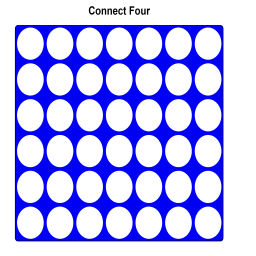
Connect Four (MiniMax with Alpha-Beta Pruning) with Graphical User Interface
Spring 2023 & Spring 2024
Enhanced a Connect Four game with alpha-beta pruning and minimax algorithms, building upon a foundation from the University of Sydney course, COMP3608 . The original command-line interface was transformed into an intuitive graphical user interface (GUI) using modern web technologies. The updated application provides an engaging and visually appealing experience for players while showcasing the power of intelligent game-playing strategies. By implementing alpha-beta pruning, the efficiency of the minimax algorithm was significantly improved, enabling the AI opponent to make strategic moves in real-time. This project demonstrates a strong understanding of artificial intelligence concepts and the ability to apply them effectively in a practical context, ultimately delivering an enhanced user experience in the classic game of Connect Four.Technologies
Python Pickle (Python) NumPy
Major League Baseball Over the Years
Fall 2021
Developed an R Shiny application to analyze 150 years of Major League Baseball (MLB) statistics. The project entailed processing extensive data from the 'Baseball Databank' and designing an interactive interface. Focused on league and team-level statistics, the app provided dynamic insights into the evolution of MLB, offering users the ability to explore and compare historical trends in hitting, pitching, and fielding. This tool represents a significant contribution to sports analytics by facilitating a deeper understanding of baseball's rich history.Technologies
R ShinyHighlighted below are courses relevant to my interest in the intersection of Artificial Intelligence and Law, encompassing a range of disciplines from political science to computer science and statistics.
Tulane Universtiy
CMPS6670: Operating Systems
Spring 2026Tulane Universtiy
CMPS6790: Data Science
Spring 2026Tulane Universtiy
CMPS6660: Quantum Computing
Fall 2025Tulane Universtiy
CMPS6730: Natural Language Processing
Spring 2025Tulane Universtiy
CMPS6720: Machine Learning
Spring 2025Tulane Universtiy
CMPS6740: Reinforcement Learning
Fall 2024Tulane Universtiy
CMPS6610: Algorithms
Fall 2024Tulane Universtiy
CMPS7010: Research Seminar
Fall 2024Grinnell College
POL319: Advanced Seminar in Constitutional Law
Spring 2024Grinnell College
CSC301: Analysis of Algorithms
Fall 2023Grinnell College
POL219: Constitutional Law and Politics
Fall 2023Grinnell College
STA340: Bayesian Statistics
Fall 2023University of Sydney
COMP3608: Introduction to Artificial Intelligence (Advanced)
Spring 2023University of Sydney
GOVT2941: Making Policy in Political Context
Spring 2023University of Sydney
DATA2901: Big Data and Data Diversity (Advanced)
Spring 2023Grinnell College
CSC341: Automata, Formal Languages, and Computational Complexity
Fall 2022Grinnell College
POL352: Advanced Seminar on the U.S. Foreign Policymaking Process
Fall 2022Grinnell College
CSC213: Operating Systems and Parallel Algorithms
Fall 2022Grinnell College
CSC207: Object-Oriented Problem Solving, Data Structures, and Algorithms
Spring 2022Grinnell College
STA230: Introduction to Data Science
Fall 2021Here is a list of relevant writing samples.
Sentient Robots & The Equal Protection Argument
Spring 2024
This law review article examines the legal implications of granting personhood and equal protection rights to sentient artificial intelligence (AI) entities. It presents a hypothetical scenario set in 2100 California to explore the potential challenges of AI regulation. The article analyzes theories of legal personhood and their applicability to AI systems with human-like cognitive abilities. It evaluates the criteria for suspect classification under the Equal Protection Clause—including history of discrimination, political powerlessness, and immutable characteristics—and their relevance to sentient AI. The analysis also considers the potential application of rational basis review to laws regulating sentient AI, weighing governmental interests in public safety against the rights of AI entities. Drawing parallels with legal precedents involving non-human entities and discrimination, the article highlights the complexities of adapting existing legal frameworks to advanced AI systems. It concludes by proposing recommendations for policy development, emphasizing the need for a multidisciplinary approach and adaptive legal frameworks to address the unique challenges presented by increasingly sophisticated AI in society.
Topics
Constitutional Law Equal Protection Clause Suspect Classification Analysis Rational Basis Review Legal Personhood AI Ethics and RegulationCommerce Clause Interpretation
Fall 2023
The essay examines the evolution and interpretation of the Commerce Clause in the U.S. Constitution. It focuses on key Supreme Court cases that have shaped the understanding of the Clause's reach in balancing state and federal powers. The essay discusses the aggregation principle, introduced in the 20th century, which allows Congress to regulate individual activities impacting interstate commerce when considered collectively. It reviews landmark cases like Wickard v. Filburn, Heart of Atlanta Motel Inc. v. United States, and Katzenbach v. McClung, highlighting their roles in expanding the interpretation of the Commerce Clause. The essay also delves into contrasting views on the Clause's interpretation, particularly examining Chief Justice Rehnquist's standard in United States v. Lopez and subsequent cases like National Federation of Independent Business v. Sebelius, presenting different judicial perspectives on the balance between federal authority and state rights in contemporary society.
Topics
Constitutional Law Commerce Clause United States v. Lopez Independent Business v. Sebelius Aggregation PrincipleArtificial Intelligence Ethics Unleashed: Navigating Australia's Regulatory Landscape
Spring 2023
The policy brief examines the urgent need for regulation in the AI field in Australia. It critically assesses Australia's current AI Ethics Principles using the multiple streams framework. The brief highlights risks associated with maintaining current policies due to AI's potential dangers and outlines economic, political, and budgetary implications of new AI regulations. Recommendations focus on enhancing fairness, privacy, transparency, and explainability of AI systems at various levels. The brief emphasizes the significance of ethical AI development in the face of emerging societal and technological challenges. This was written during my study abroad program at the University of Sydney.